Quick Answer
Botox and Dysport are both botulinum toxin type A injections. They smooth wrinkles by temporarily relaxing the muscles that cause them. The main differences are speed, spread and approved areas. Dysport often starts working a day or two sooner and spreads a little wider, so it suits broad areas like the forehead. Botox stays more precise and is FDA-approved for four cosmetic areas. Results from both usually last 3 to 4 months. Neither one is “better” across the board. The right choice depends on the area you’re treating, your muscle strength, your past results and your goals. That’s why a consultation with an experienced injector matters more than the brand name.
Botox vs. Dysport at a Glance
What Are Botox and Dysport?
Botox and Dysport are both neuromodulators, also called neurotoxins or “tox.” Both are made from purified botulinum toxin type A. When a trained provider injects a small amount into a specific facial muscle, it blocks the nerve signals that tell that muscle to contract. The muscle relaxes, and the overlying skin smooths out. They treat dynamic wrinkles, the lines that form when you move your face, such as:
-
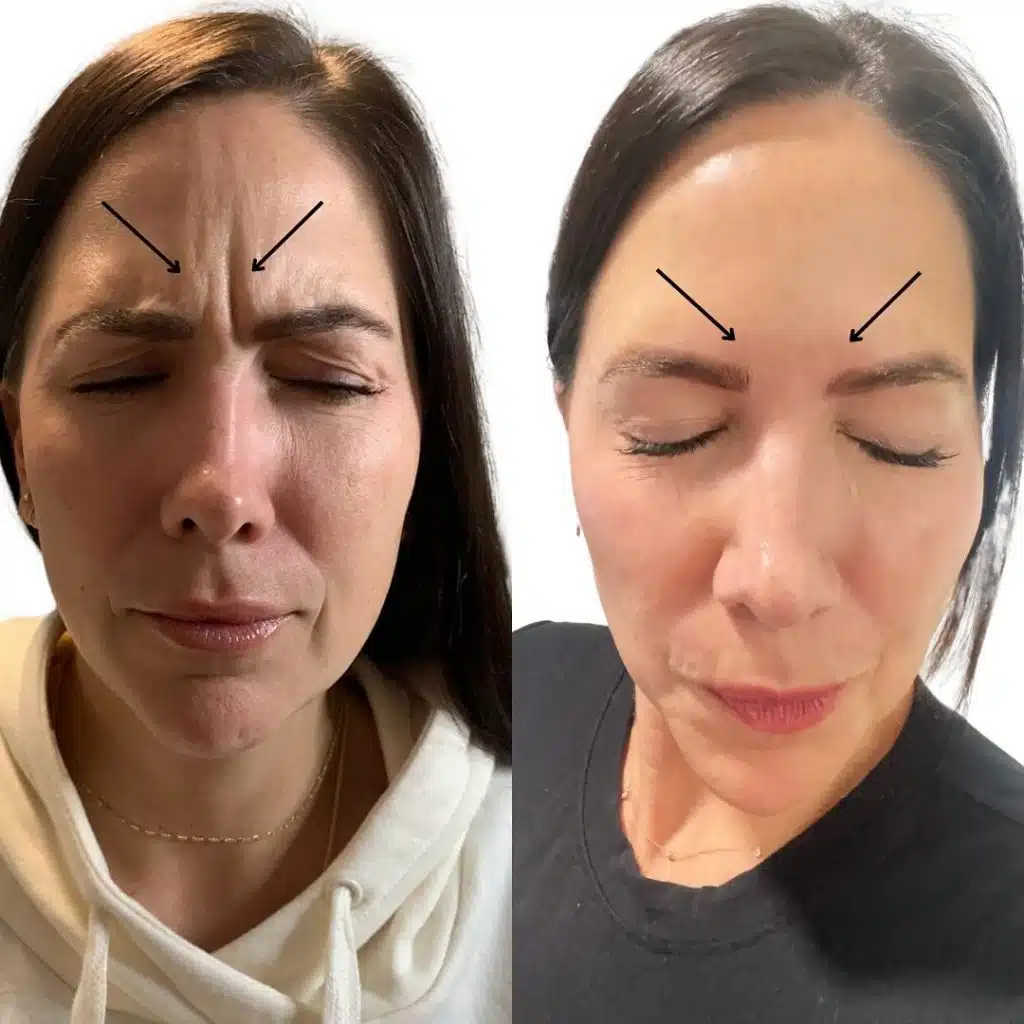
Frown lines (the “11s” between your eyebrows)
-
Forehead lines (horizontal lines when you raise your brows)
-
Crow’s feet (lines at the outer corners of your eyes)
-
Bunny lines (lines on the nose when you scrunch)
-
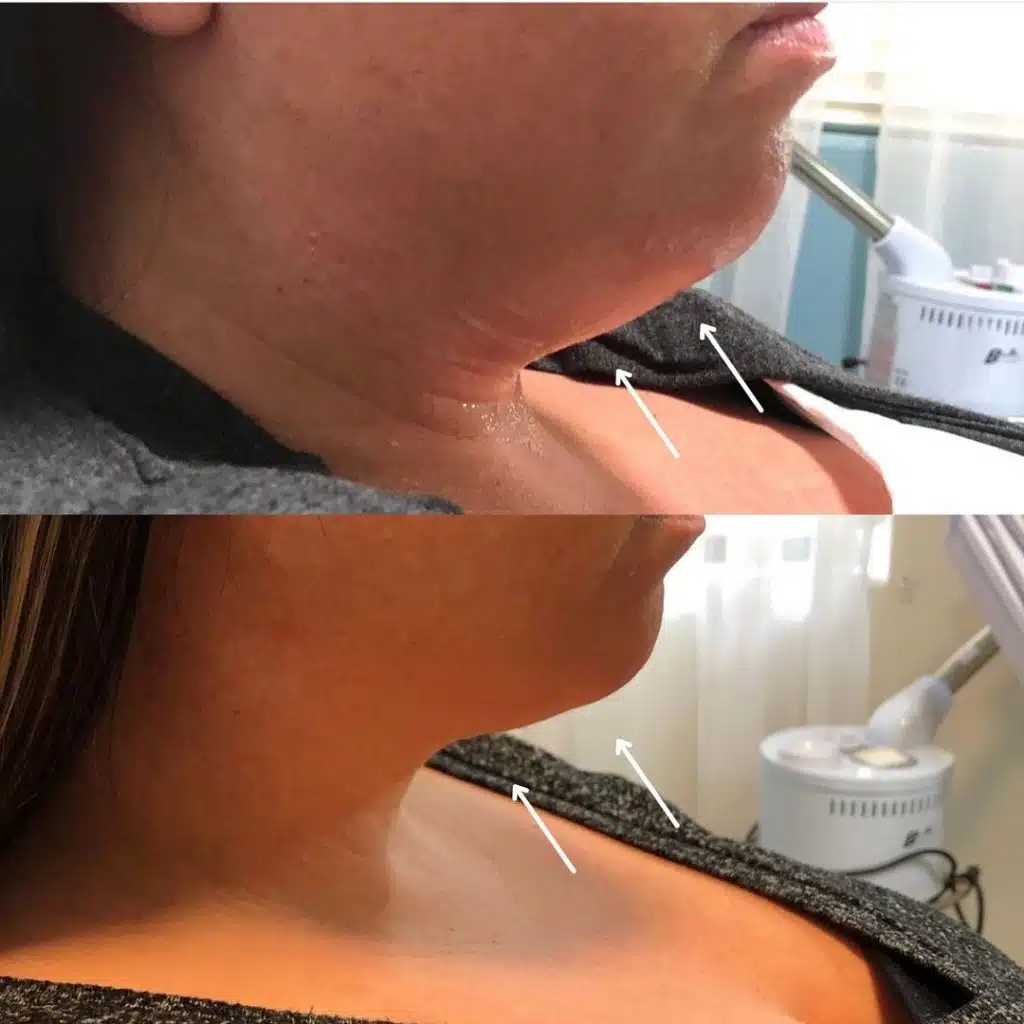
Neck bands (vertical cords between the jaw and neck)
Neither one fills lines that are present when your face is at rest. If you have deep, static lines or volume loss, your provider may suggest pairing a neurotoxin with [dermal fillers] or [RF Microneedling]. The main difference is the formula. Botox and Dysport have the same active ingredient, but each is made differently and has a different amount of accessory proteins around the toxin. That’s why they behave a little differently in the body and why their units can’t be swapped one-for-one.
The 6 Key Differences Between Botox and Dysport
1. FDA-Approved Treatment Areas
Botox Cosmetic was the first neurotoxin approved for cosmetic use, in 2002. It’s now FDA-approved for four aesthetic areas:
-
Moderate to severe frown lines (glabellar lines)
-
Moderate to severe crow’s feet
-
Moderate to severe forehead lines
-
Moderate to severe platysma bands (vertical neck bands), approved in 2024
Dysport received FDA approval in 2009 for moderate to severe frown lines in adults under 65.
What this means for you: Experienced injectors routinely use both products in other facial areas. This is called “off-label” use, and it’s a common, accepted medical practice. Still, Botox’s wider approval list makes it a common first choice for crow’s feet and neck bands.
2. How Fast They Work
This is the difference most patients notice.
-
Dysport often shows early softening within 2 to 3 days.
-
Botox usually starts working within 3 to 5 days.
-
With both, full results appear around day 10 to 14.
Tip: If you have a wedding, vacation or photo shoot coming up, book your appointment at least two weeks ahead, whichever product you choose.
3. How Much They Spread (Diffusion)
Dysport tends to spread a little wider from where it’s injected. Botox tends to stay more tightly in place.
-
Dysport’s spread can help in larger, flatter areas like the forehead, where an even, natural result matters.
-
Botox’s precision helps in small or delicate areas like crow’s feet, around the brows and the lip area, where the product needs to stay exactly where it’s placed.
The injector’s technique matters more than the product here. An experienced injector adjusts placement and dose for each product.
4. How Long Results Last
Both treatments typically last 3 to 4 months. Some patients, especially those who have had regular treatments for years, find results last closer to 5 or 6 months. How long your results last depends on:
-
How strong your muscles are (men often need more units)
-
Your metabolism and activity level (very active people may metabolize it faster)
-
Whether you got the right dose
-
How regularly you get treated
Some patients report that Dysport lasts slightly longer for them, and others say the same about Botox. Research doesn’t show one clearly beating the other. Your own experience is the best guide.
5. Units and Dosing: Why Dysport “Takes More Units”
This confuses a lot of patients. A Dysport unit is not the same as a Botox unit. On average, it takes about 2.5 to 3 units of Dysport to equal 1 unit of Botox.
These are typical starting ranges. Your dose is customized at your consultation. A higher Dysport number doesn’t mean you’re getting “more” treatment. It’s simply a different measuring scale.
6. Cost: Botox vs. Dysport
Because the units are measured differently, you can’t compare price per unit directly.
-
Botox costs more per unit, but you need fewer units.
-
Dysport costs less per unit, but you need more units.
For the same area, the total cost often comes out about the same. Some patients save a little with Dysport, especially on larger areas like the forehead.
Pricing at Wymore Laser in Winter Park:
-
Botox: $[insert] per unit
-
Dysport: $[insert] per unit
Check our [Specials] page for current offers, and see our [Financing] page for monthly payment options. Ask about manufacturer rewards programs (Allergan’s Allē and Galderma’s ASPIRE), which can lower your cost on future treatments.
Side Effects and Safety
When given by a trained medical provider, both Botox and Dysport have strong safety records backed by decades of use and millions of treatments.
Common, temporary side effects (both products):
-
Redness, mild swelling or tenderness where the needle went in
-
Minor bruising
-
Headache
-
A slight feeling of heaviness in the brow while you adjust
Less common side effects:
-
A drooping eyelid or brow (ptosis), usually temporary and less likely with an experienced injector
-
Swelling of the eyelid
-
Cold-like symptoms (reported more often with Dysport in clinical studies)
Rare but serious: Both products carry an FDA warning that the toxin effect could spread beyond the injection site. Seek medical help right away if you have trouble swallowing, speaking or breathing, or notice muscle weakness after treatment. This is very rare at cosmetic doses.
Who should not get Botox or Dysport:
-
Anyone who is pregnant or breastfeeding
-
Anyone with an infection at the injection site
-
People with certain neuromuscular conditions (such as myasthenia gravis or ALS)
-
Anyone allergic to any botulinum toxin product
-
Dysport only: people allergic to cow’s milk protein, since Dysport may contain trace amounts
Always tell your provider about your full medical history, medications and supplements. Blood thinners, fish oil and some antibiotics can raise your risk of bruising or interact with treatment.
Which Is Better for You? Our Injectors’ Guide
Bottom line: The person doing your injections matters more than the brand. A skilled injector who studies your facial anatomy and muscle movement will get a natural, refreshed result with either product.
Can You Switch Between Botox and Dysport?
Yes. Many patients switch for these reasons:
-
Their current product seems to wear off faster than before
-
They want to try a faster-acting option
-
They want to compare cost or results
It’s best to wait until your current treatment has fully worn off (usually 3 to 4 months) before switching. That way you can judge the new product fairly. Your injector will convert the dose, since the units aren’t equal. Can you use both at once? Some providers use different products in different areas during the same visit, such as Dysport for the forehead and Botox for crow’s feet. Your injector will tell you if this makes sense for you.
What to Expect at Your Botox or Dysport Appointment in Winter Park
-
Free consultation: We review your goals, medical history and facial movement, then recommend a product and number of units.
-
Preparation: The area is cleansed. Most patients don’t need numbing, though we can apply ice for comfort.
-
Injections: A few tiny injections with an ultra-fine needle. Most people say it feels like a quick pinch.
-
Done in about 10–20 minutes: No downtime. Most patients go straight back to work or errands.
-
Follow-up: We recommend a check-in at about two weeks to make sure your results are balanced.
Aftercare Tips for Best Results
-
Stay upright for 4 hours after treatment. Don’t lie down or bend over for long periods.
-
Don’t rub, massage or press the treated area for the rest of the day.
-
Skip strenuous exercise, saunas and hot yoga for 24 hours.
-
Limit alcohol for 24 hours to reduce the chance of bruising.
-
Wait until the next day to get a facial, massage or wear tight headbands or hats.
-
Be patient. Results build gradually over 10 to 14 days.
Always follow your provider’s specific aftercare instructions.
Why Patients Choose Wymore Laser for Botox and Dysport
Wymore Laser & Anti-Aging Medicine is a medically supervised med spa in Winter Park, Florida, serving Orlando and Central Florida.
-
Both Botox and Dysport offered. We recommend what’s right for you, not what’s convenient for us.
-
Experienced injectors with a natural-results philosophy: refreshed, never frozen.
-
Physician oversight from Dr. Loakhnauth Ramkishun, MD.
-
Voted Best of Orlando, plus a Best of Florida 2026 honorable mention.
-
Free consultations, regular specials and financing options.
-
Convenient location: 610 N Wymore Road, Suite A, Winter Park, FL 32789, a short drive from Orlando, Maitland, Altamonte Springs, Winter Springs and College Park.
Frequently Asked Questions
1: Is Dysport or Botox better?
Neither is better for everyone. Dysport often works a little faster and spreads more evenly over large areas like the forehead. Botox stays more precise and has FDA approval for more cosmetic areas. The best choice depends on your anatomy, the treatment area and how you’ve responded before.
2: Which lasts longer, Botox or Dysport?
Both usually last 3 to 4 months. Some patients find one lasts a bit longer for them, but research doesn’t show a consistent winner. Regular treatment can help results last longer over time.
3: Does Dysport work faster than Botox?
Usually, yes. Dysport often shows early results in 2 to 3 days, while Botox usually takes 3 to 5 days. Both reach full results in about two weeks.
4: Is Dysport cheaper than Botox?
Dysport costs less per unit, but it takes about 2.5 to 3 times as many units. For the same area, the total cost is often similar, though Dysport can be slightly less for larger areas.
5: How many units of Dysport equal Botox?
About 2.5 to 3 units of Dysport equal 1 unit of Botox. For example, 20 units of Botox for frown lines is roughly equal to 50 units of Dysport.
6: Which is better for forehead lines, Botox or Dysport?
Many injectors like Dysport for the forehead because its slightly wider spread gives a smooth, even result. Botox also works very well there. Technique and dosing matter more than the brand.
7: Can I switch from Botox to Dysport?Yes. Switching is safe and common. It’s best to wait until your current treatment wears off so you can compare results. Your injector will adjust the units.
8: Does Botox or Dysport hurt?
Most patients feel only a quick pinch. The needles are very fine and the appointment takes 10 to 20 minutes. We can use ice for extra comfort.
9: When will I see results?
You’ll notice softening within 2 to 5 days, depending on the product, and see your full results at about 10 to 14 days.
10: How much does Botox or Dysport cost in Winter Park, FL?
At Wymore Laser, Botox is $[insert] per unit and Dysport is $[insert] per unit. Your total depends on the areas treated and the number of units. Visit our [Pricing] and [Specials] pages, or book a free consultation for an exact quote.
Book Your Botox or Dysport Consultation in Winter Park
Still not sure which neurotoxin is right for you? Let our experienced injectors decide with you. We’ll assess your facial movement, talk through your goals and recommend the product and dose that will give you natural, refreshed results
Want Wymore Laser's skin guides and news to show up first when you search Google?